Direkt zum Hauptbereich

The Taliban and their Drug Problem

Drug cultivation is one of Afghanistan's most important sources of income. Die WELT visited the fields and talked to the people who live from growing opium and marijuana. The Taliban banned the cultivation of these plants once before. But this time is different.

This article was originally published by Die Welt on October 13, 2021. The original can be found here. Translation by SyriacPress 

By Alfred Hackensberger correspondent for WELT


In the full afternoon heat, they huddle together in the shade of the last remaining grave on the grounds of the dilapidated cemetery of Mazar-i-Sharif. Some smoke crystal meth from small glass pipes, others heroin on aluminum foil, or opium. The relaxed mood of the ten or so men are changes abruptly when an armed member of the Taliban appears.

He suddenly hits one of the drug users with the butt of his rifle and kicks him when he’s down. “The Taliban beat us all the time,” says the sturdy and tall Noorallah after the Taliban fighter with the conspicuous red scarf has left. “Look here,” says the 37-year-old construction worker. He points to his swollen hand and a thick left cheek. He rolls up one sleeve of his shirt. The arm is covered with red-blue stains. “More than a thousand people used to come here to the compound every day,” Noorallah says. “Since the Taliban have been in power, that’s over. Everyone is afraid of being beaten up and arrested.”
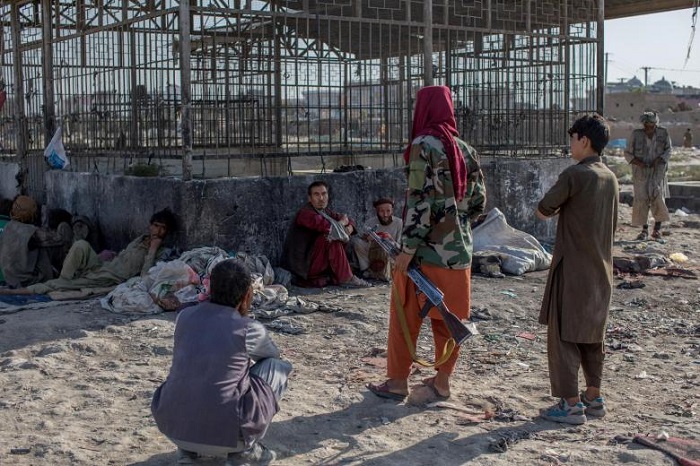

A Talib tries to scare away the drug addicts. Source: Sebastian Backhaus

The radical Islamists have nothing to do with modern drug therapies. Instead, they follow anachronistic beliefs that consider prohibitions and especially draconian punishments as a panacea. The immorality and the evil that discourages a God-fearing life must be combated. Alcohol and all other drugs are considered “haram” (forbidden) 


Kommentare

Beliebte Posts aus diesem Blog

Christoph Luxenberg - Interview/ English

The Virgins and the Grapes: the Christian Origins of the Koran A German scholar of ancient languages takes a new look at the sacred book of Islam. He maintains that it was created by Syro-Aramaic speaking Christians, in order to evangelize the Arabs. And he translates it in a new way by Sandro Magister That Aramaic was the lingua franca of a vast area of the ancient Middle East is a notion that is by now amply noted by a vast public, thanks to Mel Gibson’s film “The Passion of the Christ,” which everyone watches in that language. But that Syro-Aramaic was also the root of the Koran, and of the Koran of a primitive Christian system, is a more specialized notion, an almost clandestine one. And it’s more than a little dangerous. The author ...

Fragen zum Massaker

Mehr als 250 Menschen sollen in Tremse, einem kleinen Dorf nahe der Stadt Hama, getötet worden sein. Darunter viele Frauen und Kinder. Die Täter: Soldaten der syrischen Armee. So die erschreckende Meldung über ein neues Massaker im syrischen Krieg. Es wäre das bisher grösste seit Beginn des Blutvergiessens vor 16 Monaten. Die Empörung weltweit ist gross. US-Aussenministerin Hilary Clinton sprach aufgebracht von «unzweifelhaften Beweisen, dass das syrische Regime absichtlich unschuldige Zivilisten tötete.» Doch was wissen wir tatsächlich über das Massaker von Tremse? Von heftigen Kämpfen und Hubschraubern, die Raketen abschossen, berichtet die Patrouille der syrischen UNO-Beobachtermission gestern. Sie kam am Freitag bis auf sechs Kilometer an das Dorf heran. Die Kämpfe hätten begonnen, nachdem die Freie Syrische Armee (FSA) einen Konvoi der Regierungstruppen angegriffen hatte. «Unsere Patrouille», so heisst es im zweiseitigen Bericht der UNO, der gestern veröffentlicht w...

Christen als Opfer der syrischen Rebellen

Die andere Seite der Gewalt: In der Protest-Hochburg Homs starben viele Christen. Sie waren Ziel der Aufständischen. Mehr als zwei Dutzend Menschen sind am Samstag gestorben, als zwei Autobomben eine Polizeistation und ein Gebäude des syrischen Geheimdienstes zerstörten. Es ist der dritte solche Anschlag binnen drei Monaten. „Sie tragen alle Erkennungszeichen von al-Qaida", bestätigte James Clapper, Direktor des nationalen US-Geheimdienstes. Das hört die syrische Opposition gar nicht gern. Sie beschuldigt nämlich das Regime, die Autobombenanschläge inszeniert zu haben, um Regierungsgegner zu diskreditieren. Dabei nimmt es die Opposition selbst nicht so genau mit der Wahrheit. „Der Großteil der Medien nimmt Partei für die Rebellen", sagt Patrick Sookhdeo. „Sie klagen ausnahmslos die syrische Regierung an und vergessen, kritische Fragen zu stellen." Sookhdeo arbeitet als Internationaler Direktor des Barnabas Funds, einer christlichen Hilfsorganisation, die sich weltweit um...